
Divisions

Not Finding What You're Looking For?
Head over to our contact page and tell us what you’re looking for and we’ll handle the rest!
Head over to our contact page and tell us what you’re looking for and we’ll handle the rest!
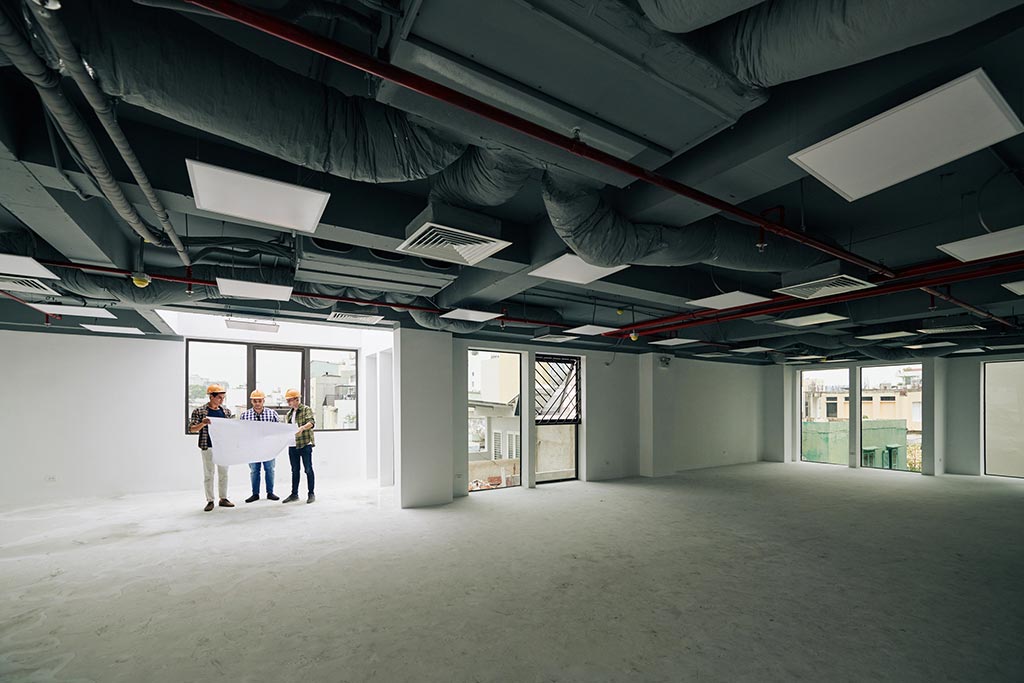
Companies talk a lot about “future office design,” but most of what gets published feels disconnected from how people really work. The lists get long, the buzzwords stack up, and none of it helps leaders figure out what they should actually do with the space they already have. If you peel back the noise, though, a smaller set of trends keeps showing up across industries, practical changes, not big design statements.
In 2026, these seven trends are poised to shape modern offices in noticeable ways. They focus less on style and more on how people move, think, collaborate, and recharge throughout the day. And they’re all renovations that companies can approach in realistic, manageable steps rather than some dramatic overhaul that drags on for months.
1. Human-Centric Environments
A human-centric environment doesn’t try to impress visitors; it supports the people who use the space every day. That shift changes the way companies make decisions. Instead of asking, “What looks modern?” they’re asking, “What feels better for the people doing the work?”
You see this in the materials, warmer textures, less harsh color palettes, and better acoustic control. But it’s the layout where the impact shows up most. People want spaces that don’t drain them. They want a place to step away for a minute without feeling like they’ve left the entire office. They want furniture that doesn’t leave them feeling stiff by two p.m.
This trend isn’t flashy, but it’s powerful because employees feel it in their bodies. That’s what drives retention and reduces burnout more than any other perk or motivational poster ever will.
2. Hybrid-Ready Layouts
Hybrid isn’t a temporary experiment anymore. It’s the foundation. The problem is that many offices still look like they’re designed for 2015 when all employees came to work every day. Renovations in 2026 focus on flexibility, layouts that can handle waves of people on Tuesday and a half-empty floor on Friday without giving the feeling like something is “wrong.”
Movable partitions, modular desks, touchdown spaces, and open collaboration areas that don’t disrupt quieter work nearby, are elements that are showing up in more and more renovation plans. The goal is to make the office feel supportive, whether ten or fifty people show up.
The trick here is designing for variation. Once a floor plan can absorb uneven attendance without disrupting workflow, the office stops feeling unpredictable for the teams using it.
3. Activity-Based Working Zones
People don’t work in one mode all day, and the office shouldn’t pretend they do. Activity-based design breaks the space into small environments with distinct purposes. Not themed zones or gimmicks, just thoughtful alternatives.
This trend shows up in places such as the following:
• Quiet corners for focused work that actually stay quiet
• Semi-open areas for casual collaboration
• Tables you can gather around without booking a meeting space
• Private nooks where someone can reset for a minute
• A bigger creative room where brainstorming doesn’t bother everyone else
Companies that adopt this approach often end up wondering how they worked any other way. It reduces conflict, no more whispering at desks or holding long conversations in hallways. People self-select the space that fits the task.
4. Soundproof Mini-Cubicles
This may be the least glamorous trend, but it is also the most unavoidable. With hybrid schedules, everyone is juggling video calls, and open offices don’t handle this nonstop conversation well. You either create pockets of privacy or the noise spreads, leaving every corner feeling busy.
The new versions of mini-cubicles are better than the early models. They breathe better, look nicer, and feel less like you’re sealing yourself in. They’re designed for short stints, quick calls, one-on-ones, and client updates, but they save the rest of the office from chaos.
If you only make one upgrade in 2026, this might be the one your people appreciate most.
5. Creative Spaces for Innovation
Companies have realized that brainstorming in a standard conference room kills energy. The room feels formal, the chairs feel stiff, and the ideas follow that same shape. Creative spaces change the dynamic.
The setups vary, but most include writable walls, reconfigurable tables, materials for people to sketch on or pin up, and enough openness so teams don’t bump into each other every time they move around. The environment encourages movement, which in turn supports better thinking.
These rooms are still professional, but they also support the kind of conversations companies can’t have in a typical boardroom.
6. Lighting That Supports Well-Being
Lighting shapes the entire mood of a workspace, and employees know it immediately. In 2026, we’ll see forward-thinking offices shift away from stark, one-dimensional overhead lighting toward layered light, warmer tones, more lamps, adjustable intensities, and daylight-mimicking fixtures that change slightly throughout the day.
You don’t need a massive renovation to improve office lighting. Small changes, such as task lamps, diffusers, and retrofitting outdated fixtures, can transform how employees feel without touching anything else in the building.
When the lighting is right, the office feels calmer. People stay alert without getting overstimulated. Productivity changes quietly, but meaningfully.
7. Zero-Waste and Eco-Forward Interiors
Sustainability is no longer a “nice to have” project; it’s the baseline expectation. Companies aren’t just choosing eco-friendly paint or flooring; they’re thinking about lifecycle. What can be repaired instead of replaced? What materials come from responsible sources? Which vendors reclaim old carpet tiles or repurpose furniture?
The eco-renovation is less about buying new and more about building smarter. And employees notice when their workplace aligns with their values. It creates a sense of pride that marketing can’t manufacture.
Design trends are easy to talk about and harder to translate into an actual workspace. That’s where Indoff fits in, not as a “pick a style, and we’ll copy it” vendor, but as a partner who helps companies figure out what these trends mean for their spaces.
Indoff’s experts spend time inside the environment before making recommendations. We look at the flow, the bottlenecks, the places where the energy drops or distractions spike. We notice things employees have stopped noticing, simply because they’ve lived with them for years. And we pull together options that make sense financially and functionally, rather than overwhelming you with catalogs.
Hybrid-friendly layouts, activity-based zones, soundproof booths, better lighting, and sustainable material choices, aren’t one-size-fits-all decisions. They depend on the culture, work style, building, and even the team’s personality. Indoff operates with that understanding front and center.
If you want to explore how these seven trends could reshape your office in ways that feel meaningful, not trendy for trend’s sake, talk to a local Indoff commercial interior partner and start with a conversation instead of a guess. We know how to turn big design ideas into spaces that actually support the people who work in them.
Heather joined the Indoff team in 2026, bringing extensive Human Resources experience from both corporate and nonprofit organizations. Throughout her career, she has built a reputation as a collaborative leader who is passionate about developing people, strengthening workplace culture, and fostering employee engagement. Her diverse background provides valuable insight into talent management, organizational development, and strategic HR initiatives. Heather is committed to supporting teams and helping individuals achieve their full potential while contributing to the continued growth and success of the organization.
Phone: (314) 997-1122 ext. 1202
heather.rice@indoff.com
Tom joined Indoff in 2009 as a Sales Partner, bringing over a decade of valuable experience in office supplies, promotional products, and commercial interiors. In 2024, Tom was promoted to Vice President of Business Development, where he leads Indoff’s Strategic Sales initiative to help shape the company’s long-term growth. As a certified leadership coach, Tom collaborates closely with Indoff’s Partners, providing strategic planning and personalized guidance to help them build strong businesses. Tom’s leadership and coaching expertise are instrumental in ensuring Indoff remains a leading provider of business solutions nationwide.
Phone: (314) 997-1122 ext. 1221
tom.vanhoozer@indoff.com
Courtney joined Indoff in 2010. She brings years of experience in project management and tech solutions and is responsible for supporting our Partners’ sales efforts.
Phone: (314) 997-1122 ext. 1291
courtney.brazell@indoff.com
Josh joined Indoff in 2013 as part of the acquisition of Allied Appliance and was paramount to Indoff’s acquisition of Absocold, a manufacturer of refrigerators and microwaves, in 2017. In 2025, Josh was promoted to President of Indoff, where he collaborates closely with Indoff’s Partners and Marketing department to develop and implement strategies that enhance the Indoff brand. Josh’s leadership and industry knowledge are instrumental in ensuring Indoff remains a leading provider of business solutions nationwide.
Phone: (314) 997-1122 ext. 1107
josh.long@indoff.com
Jim joined Indoff in 1988 after spending 5 years at Ernst & Young, where he specialized in audit and accounting for privately-held businesses. Jim is responsible for the day-to-day management of Indoff.
Phone: (314) 997-1122 ext. 1203
jim.malkus@indoff.com
John’s background includes the start up and acquisition of several successful business ventures, and he provides strategic planning and overall corporate governance.
Phone: (314) 997-1122 ext. 1201
john.ross@indoff.com