
Divisions

Not Finding What You're Looking For?
Head over to our contact page and tell us what you’re looking for and we’ll handle the rest!
Head over to our contact page and tell us what you’re looking for and we’ll handle the rest!
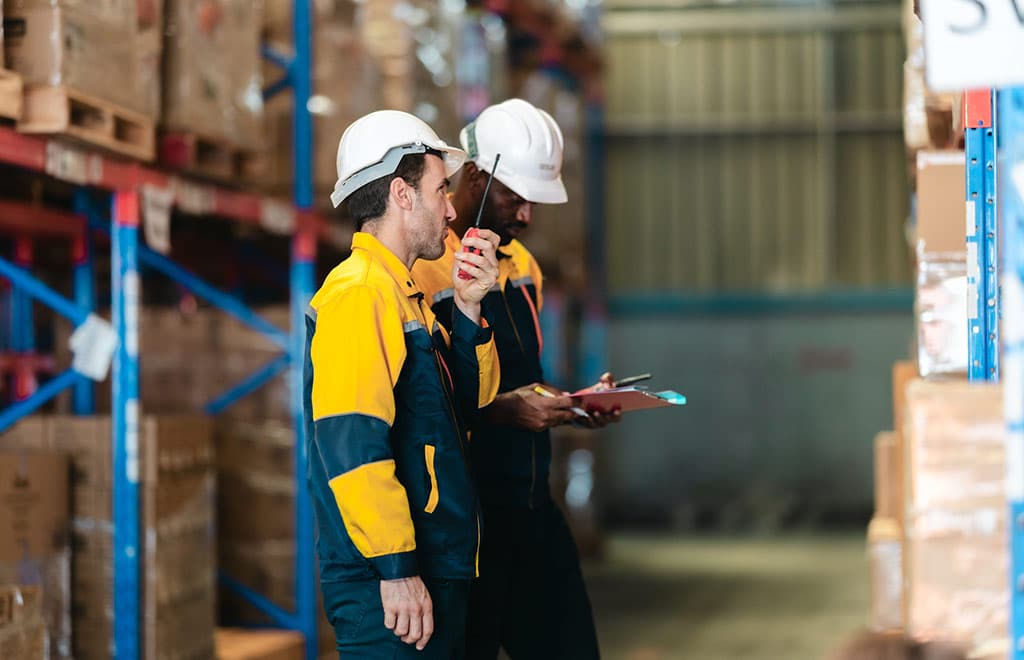
As you plan your business for 2027, warehouse efficiency should be a top priority. A faster warehouse helps control costs, meet customer expectations, and support business growth. Higher order volumes and rising customer demands are pushing warehouse managers to find ways to move products faster without jeopardizing accuracy or adding costs. Preparing for faster warehouse operations doesn’t necessarily mean investing in a completely new facility or adding extensive automation. Often, meaningful improvements begin with examining your existing warehouse layout, finding operational bottlenecks, and making better use of your current equipment and storage space. By attending to these areas now with the right warehouse layout design and installation services, you can create more efficient workflows and build a warehouse that’s ready for the year ahead.
One of the first steps toward improving warehouse efficiency is reviewing how people, goods, and equipment move through your facility. Even a well-stocked warehouse can experience delays when the layout creates unnecessary travel, congestion, or overlapping workflows. Look at the paths employees take when receiving shipments, picking orders, moving products between storage areas, and preparing outgoing shipments. Identify any areas where workers often have to double back, travel long distances, or go around obstacles. Equipment traffic matters too, especially if you have forklifts, pallet jacks, carts, and employees sharing the same aisles.
Repositioning workstations, adjusting aisles, or relocating frequently used items can help you cut down on unnecessary movement. Floor markings and clearly designated traffic lanes can improve organization even more by establishing predictable routes for employees and equipment. Remember, you’re not trying to reinvent the wheel here. The goal is to create a layout that supports the natural flow of warehouse activities while lessening congestion and wasted time.
Inventory placement has a direct impact on how quickly you can move it through your warehouse. When frequently ordered products are stored in locations that require a lot of travel, employees spend valuable time retrieving items instead of processing more orders. Review your sales and order fulfillment information so you can identify your fastest-moving inventory. Products that are consistently being pulled from inventory for orders should generally be stored in accessible locations near packing and shipping areas, while still permitting safe and unimpeded traffic flow. Slower-moving products can be placed in less easy-to-reach storage locations, like higher rack levels or areas farther from primary picking stations.
It’s also worth reviewing your inventory placement periodically throughout the year. Seasonal demand changes, new products, and changes in customer buying patterns can make your existing storage strategy less effective. Routinely updating product locations helps keep the warehouse aligned with actual customer demand.
Before investing in new equipment or technology, you should understand where you’re currently losing time so you can address it effectively. Look over order processing times, picking accuracy, receiving turnaround, inventory errors, and shipping performance. Look for patterns that could point to particular areas that are getting bottlenecked. For example, your warehouse might process orders quickly but experience delays because packing stations can’t keep up with picking activity. Another warehouse might have enough storage capacity but have difficulty with receiving because incoming products pile up before they can be inspected and put away.
Employee feedback is another useful resource for finding these weak points in your workflow. Workers performing warehouse tasks on a daily basis often recognize inefficiencies which aren’t immediately obvious in your reports. Once bottlenecks are identified, work on improvements starting with the ones that will have the biggest effect on productivity. Fixing one major bottleneck can sometimes offer more measurable improvements than making several smaller changes throughout the warehouse.
The right material handling equipment can really cut down on the time and labor needed to move products throughout your warehouse. However, equipment needs to be selected based on actual workflows. Avoid simply choosing the newest or most advanced options.
Conveyors, for example, can improve output by moving products between picking, packing, sorting, and shipping areas quickly. They can be especially useful in facilities that process large numbers of orders and a steady flow of goods. Warehouse carts are an option that provides flexibility for moving smaller products, tools, and supplies. Pallet jacks help employees move palletized inventory over short distances, while forklifts and other lift equipment help with moving heavier loads.
When picking your equipment, think about the types of products you handle, average load weights, travel distances, aisle sizes, and daily volumes. Equipment should work with your warehouse layout and help your employees complete tasks efficiently. The right equipment can also cut down on unnecessary manual handling and help create more consistent workflows.
A warehouse designed around your current operating conditions might cause problems when order volumes increase. As you plan for 2027, consider how your warehouse will accommodate future growth. Review peak-season volumes, projected inventory needs, staffing levels, and your available storage space. Think about whether your existing equipment and workflows can handle increased demand or if certain areas will become bottlenecks as demand goes up.
You should also leave some room for future equipment upgrades. If you’re considering conveyors, automated storage systems, improved picking technology, or other automation, you should think about the space needed for installation when planning your layout. Keeping some level of flexibility can make future improvements easier and less disruptive to operations. Your warehouse doesn’t need to automate every process immediately, but your layout should allow room for these kinds of changes in the future.
Preparing your warehouse for faster operation requires thoughtful planning, the right equipment, and an understanding of how your daily workflows affect productivity. Indoff helps businesses evaluate and improve their operations with material handling solutions like warehouse layout planning, racking and storage systems, equipment selection, installation, and overall warehouse optimization. With support from one of our experienced representatives, you can design a more efficient warehouse in 2027. Contact an Indoff representative today to get started.
Heather joined the Indoff team in 2026, bringing extensive Human Resources experience from both corporate and nonprofit organizations. Throughout her career, she has built a reputation as a collaborative leader who is passionate about developing people, strengthening workplace culture, and fostering employee engagement. Her diverse background provides valuable insight into talent management, organizational development, and strategic HR initiatives. Heather is committed to supporting teams and helping individuals achieve their full potential while contributing to the continued growth and success of the organization.
Phone: (314) 997-1122 ext. 1202
heather.rice@indoff.com
Tom joined Indoff in 2009 as a Sales Partner, bringing over a decade of valuable experience in office supplies, promotional products, and commercial interiors. In 2024, Tom was promoted to Vice President of Business Development, where he leads Indoff’s Strategic Sales initiative to help shape the company’s long-term growth. As a certified leadership coach, Tom collaborates closely with Indoff’s Partners, providing strategic planning and personalized guidance to help them build strong businesses. Tom’s leadership and coaching expertise are instrumental in ensuring Indoff remains a leading provider of business solutions nationwide.
Phone: (314) 997-1122 ext. 1221
tom.vanhoozer@indoff.com
Courtney joined Indoff in 2010. She brings years of experience in project management and tech solutions and is responsible for supporting our Partners’ sales efforts.
Phone: (314) 997-1122 ext. 1291
courtney.brazell@indoff.com
Josh joined Indoff in 2013 as part of the acquisition of Allied Appliance and was paramount to Indoff’s acquisition of Absocold, a manufacturer of refrigerators and microwaves, in 2017. In 2025, Josh was promoted to President of Indoff, where he collaborates closely with Indoff’s Partners and Marketing department to develop and implement strategies that enhance the Indoff brand. Josh’s leadership and industry knowledge are instrumental in ensuring Indoff remains a leading provider of business solutions nationwide.
Phone: (314) 997-1122 ext. 1107
josh.long@indoff.com
Jim joined Indoff in 1988 after spending 5 years at Ernst & Young, where he specialized in audit and accounting for privately-held businesses. Jim is responsible for the day-to-day management of Indoff.
Phone: (314) 997-1122 ext. 1203
jim.malkus@indoff.com
John’s background includes the start up and acquisition of several successful business ventures, and he provides strategic planning and overall corporate governance.
Phone: (314) 997-1122 ext. 1201
john.ross@indoff.com