
Divisions

Not Finding What You're Looking For?
Head over to our contact page and tell us what you’re looking for and we’ll handle the rest!
Head over to our contact page and tell us what you’re looking for and we’ll handle the rest!
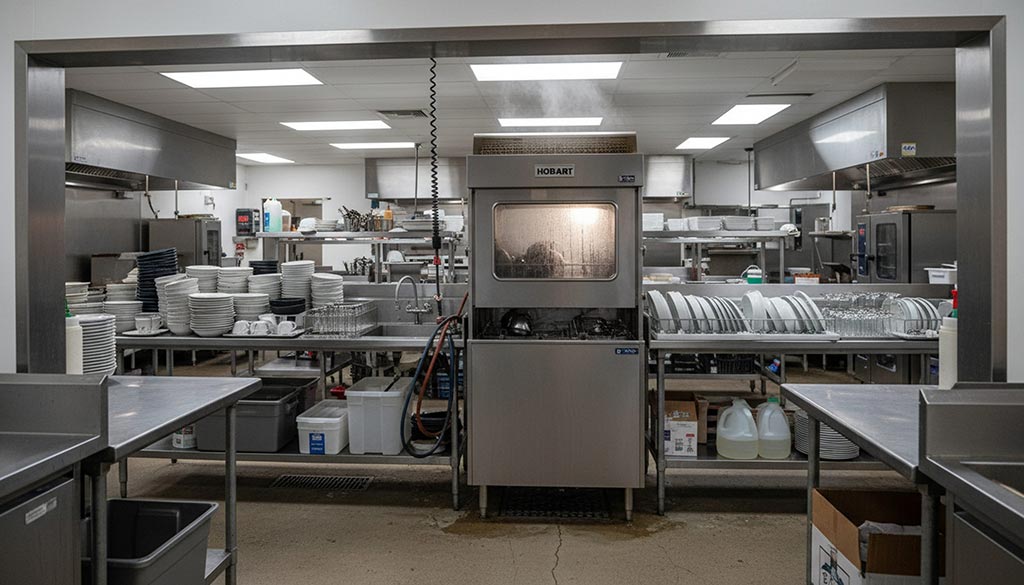
Outfitting a commercial kitchen or facility with the right appliances is a major investment, and the equipment you choose directly affects workflow efficiency, food quality, safety standards, and operating costs. Restaurants, hospital cafeterias, school kitchens, and corporate dining spaces all rely on dependable performance and the right specifications for their volume and menu demands. This article breaks down what to consider when purchasing commercial appliances, including key equipment categories and cost-effective selection criteria. For commercial appliance selection consulting services, Indoff can help you evaluate options and choose equipment that fits your operation.
Commercial appliances are designed for high-volume, continuous use. Unlike residential equipment, they’re built to withstand heavy workloads, meet strict safety regulations, and support multiple staff members working on them simultaneously. Having the right appliances in your commercial kitchen can offer the following types of benefits:
Choosing the wrong appliances can create bottlenecks, increase energy costs, and shorten equipment lifespan. It can also lead to uneven output during peak periods, more downtime for repairs, and higher long-term replacement expenses.
Before making any purchasing decisions, it’s important to understand the main categories of equipment used in most facilities:
Choosing the right equipment goes beyond simply selecting your appliances. You need to evaluate how they’ll function in your individual kitchen. One of the biggest mistakes facilities make is underestimating capacity needs. If your kitchen handles large volumes, be sure to choose higher-capacity appliances to fit. Prioritize equipment durability over upfront cost, and always avoid residential-grade or light-duty equipment.
Be sure to also consider available space and your layout. Poor equipment placement can disrupt your kitchen’s workflow and slow down operations. Consider floor space and clearance requirements around each appliance, ventilation and exhaust systems, storage areas, and accessibility for staff movement. A well-planned layout improves productivity and reduces the odds of kitchen accidents.
Consider energy costs as well, as they can create major long-term expenses. Investing in energy-efficient appliances can help reduce your operating costs over time, so look for ENERGY STAR® ratings, efficient insulation, temperature control, and appliances designed to minimize heat loss. While these kinds of energy-efficient models might cost more up front, they often provide long-term savings.
You will also want to decide between gas and electric appliances. Many commercial appliances come in both options, and each has practical tradeoffs. Gas models have instant heat, deliver strong performance for high-volume cooking, work without electricity, and give cooks responsive temperature control. Electric models can simplify installation in some facilities and may be easier to service depending on your setup and available support. The best fit comes down to your kitchen’s workflow, utility availability, ventilation requirements, and the type of cooking you do most often.
When buying commercial equipment, you’ll also need to decide whether you prefer to buy new or used equipment. Buying new equipment ensures you’re getting the latest technology and highest efficiency from all of your appliances. They’re also backed by manufacturer warranties and often have a lower risk of breakdowns. However, the upfront cost is higher.
Buying used appliances requires a lower initial investment, which is good for smaller startups or other budget-conscious operations. But the warranty is usually very limited (if the appliance has one at all), and there can be a higher risk of maintenance issues. This can also raise potential compliance concerns. For critical equipment like refrigeration or cooking systems, new can be the safer long-term investment.
Even experienced buyers can make costly mistakes when buying commercial appliances. Overbuying and underbuying are both equally common errors. Buying equipment that’s too large wastes space and energy, while undersized equipment creates bottlenecks. Always make sure you’re buying the right size of equipment for your needs.
Another common mistake is ignoring the maintenance needs of your equipment. Some appliances require more frequent servicing than others. Always factor in maintenance schedules, the availability of replacement parts, and service support when deciding what equipment to buy. Keep in mind, the cheapest option is not always the best choice. When buying equipment, consider the total cost of ownership, including things like energy usage, repairs, parts prices, and expected lifespan.
Finally, when choosing equipment, consider your facility’s future growth. Your facility’s needs may evolve over time, so it’s important to think ahead. Talk to your staff and get their input on how your facility’s current and future needs can be met with the right equipment. Investing in flexible equipment now can save you from costly upgrades later.
Purchasing commercial appliances for a facility is a complex and incredibly important process. The right equipment supports efficiency, ensures food safety, employee safety, and contributes to your long-term profitability. That’s why it’s important that you don’t attempt to pick out your commercial appliances alone. With the right partner, you can build a commercial kitchen that performs reliably under pressure.
Talk to an Indoff representative today to learn how we can help you select commercial appliances and other equipment to support your growing, thriving facility.
Heather joined the Indoff team in 2026, bringing extensive Human Resources experience from both corporate and nonprofit organizations. Throughout her career, she has built a reputation as a collaborative leader who is passionate about developing people, strengthening workplace culture, and fostering employee engagement. Her diverse background provides valuable insight into talent management, organizational development, and strategic HR initiatives. Heather is committed to supporting teams and helping individuals achieve their full potential while contributing to the continued growth and success of the organization.
Phone: (314) 997-1122 ext. 1202
heather.rice@indoff.com
Tom joined Indoff in 2009 as a Sales Partner, bringing over a decade of valuable experience in office supplies, promotional products, and commercial interiors. In 2024, Tom was promoted to Vice President of Business Development, where he leads Indoff’s Strategic Sales initiative to help shape the company’s long-term growth. As a certified leadership coach, Tom collaborates closely with Indoff’s Partners, providing strategic planning and personalized guidance to help them build strong businesses. Tom’s leadership and coaching expertise are instrumental in ensuring Indoff remains a leading provider of business solutions nationwide.
Phone: (314) 997-1122 ext. 1221
tom.vanhoozer@indoff.com
Courtney joined Indoff in 2010. She brings years of experience in project management and tech solutions and is responsible for supporting our Partners’ sales efforts.
Phone: (314) 997-1122 ext. 1291
courtney.brazell@indoff.com
Josh joined Indoff in 2013 as part of the acquisition of Allied Appliance and was paramount to Indoff’s acquisition of Absocold, a manufacturer of refrigerators and microwaves, in 2017. In 2025, Josh was promoted to President of Indoff, where he collaborates closely with Indoff’s Partners and Marketing department to develop and implement strategies that enhance the Indoff brand. Josh’s leadership and industry knowledge are instrumental in ensuring Indoff remains a leading provider of business solutions nationwide.
Phone: (314) 997-1122 ext. 1107
josh.long@indoff.com
Jim joined Indoff in 1988 after spending 5 years at Ernst & Young, where he specialized in audit and accounting for privately-held businesses. Jim is responsible for the day-to-day management of Indoff.
Phone: (314) 997-1122 ext. 1203
jim.malkus@indoff.com
John’s background includes the start up and acquisition of several successful business ventures, and he provides strategic planning and overall corporate governance.
Phone: (314) 997-1122 ext. 1201
john.ross@indoff.com